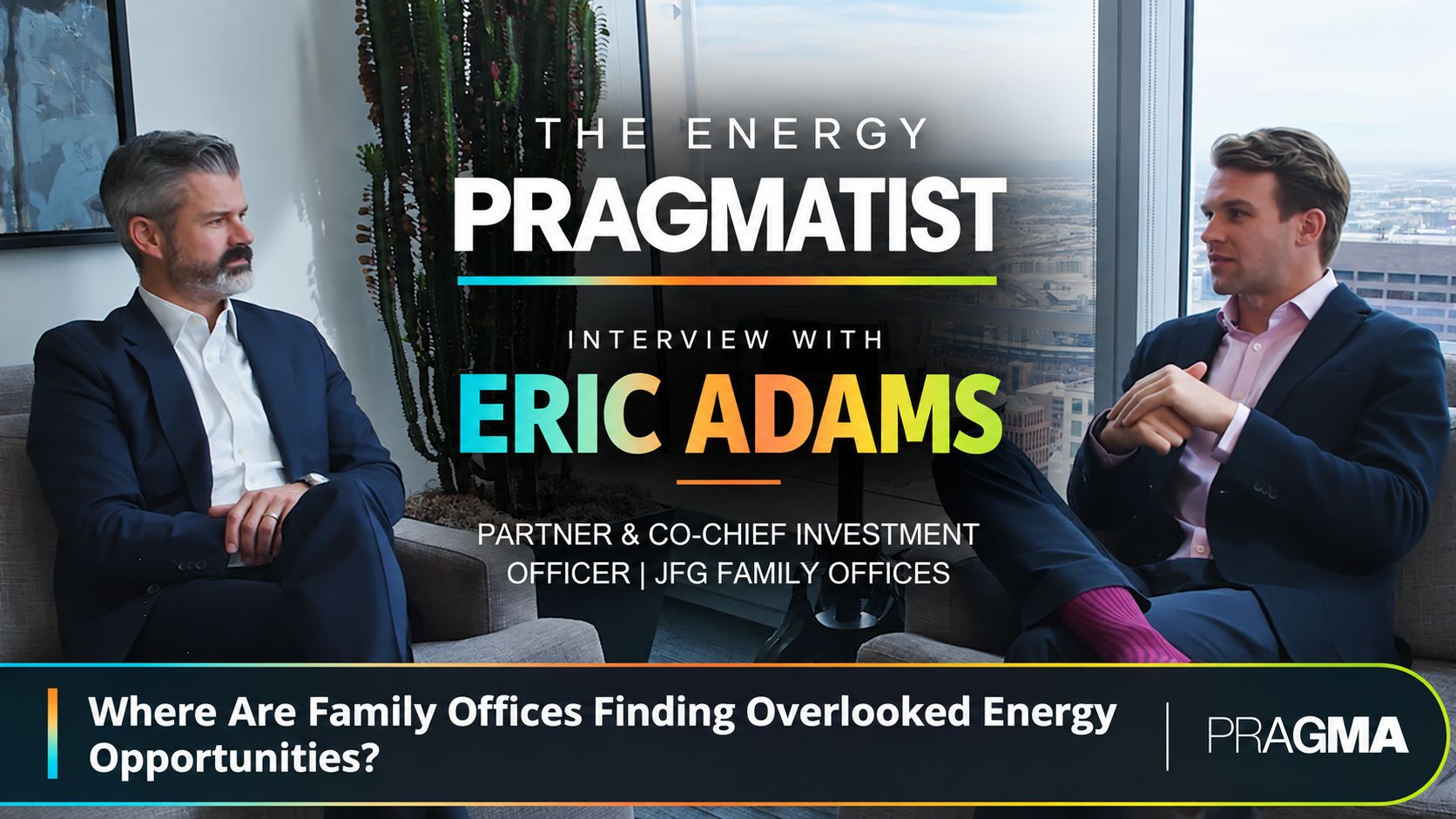
Where Are Family Offices Finding Overlooked Energy Opportunities?
Energy opportunities do not always fit neatly within institutional investment mandates. An asset may be too small, a strategy may sit outside an established allocation, or a seller may need liquidity on a timetable that other investors cannot accommodate. For allocators with flexibility, understanding why an opportunity has been passed over can be an important starting point.
In this episode of The Energy Pragmatist, Ben West speaks with Eric Adams, Partner & Co-Chief Investment Officer at JFG Family Offices, a multifamily office serving approximately 140 families, about how that thinking shapes its approach to energy and real assets.
We are underwriting these opportunities that we believe in many cases are undercapitalized, that are addressing an immediate need and a bottleneck that satisfy a spectrum of portfolio goals and objectives, whether that's downside protection or cash flow or growth.
Cash flow, consolidation and energy secondaries
Eric explains why producing oil and gas wells remain a significant part of JFG’s energy allocations. Industry consolidation can bring established, cash-generating assets to market when newly merged businesses sell holdings that no longer fit their core strategy.
For JFG, assessing those opportunities means examining entry valuations, production history, operating costs and the experience of the sponsor. Eric also discusses why he believes energy secondaries continue to offer an attractive opportunity set, as older funds seek liquidity and available investment capital remains uneven.
Matching the investment to the portfolio
Across families with different objectives, the same energy allocation will not suit everyone. Eric outlines how JFG evaluates opportunities against each family’s appetite for risk, income needs and growth ambitions.
He explains the distinction between owning producing wells and receiving mineral royalties, including why operating-cost exposure informs a different approach to hedging. The discussion also considers how cash-generating power assets can sit alongside earlier-stage opportunities in geothermal and nuclear.
Investing in the bottlenecks
Beyond traditional energy, Eric’s focus turns to the physical infrastructure supporting AI, electrification and manufacturing. He discusses the case for investing in enabling hardware and power supply, alongside the metals and minerals needed to support further development.
Throughout the conversation, the emphasis is on translating broad investment themes into opportunities that can be assessed, underwritten and sized appropriately within a diversified portfolio.
Watch the Full Episode:
This episode is for informational and educational purposes only. The views expressed are those of Greg Reid as of the recording date and may change without notice. Nothing discussed is investment, legal, or tax advice, or a recommendation to buy or sell any security. It is not an offer to sell, or a solicitation of an offer to buy, an interest in any fund or investment product. Any such offer is made only through confidential offering documents to qualified investors. References to specific companies, managers, transactions, and market data are for illustration only, and Westwood and its clients may hold positions in securities discussed. Forward-looking statements and market views are estimates and may not occur as described. Past performance is not indicative of future results. Investing involves risk, including the possible loss of principal.