Political Risk in Energy Through a Structural Lens
Political risk has always been embedded in the energy markets. What is less well documented is how the duration of political risk reshapes capital behaviour and, over time, the physical systems those markets depend on. Oil, gas, and power are long-cycle industries operating on investment and infrastructure timelines that rarely align with political resolution.
A critical challenge is not just assessing risk but estimating its duration. Capital responds to prolonged ambiguity by deferring or reallocating investment, while political resolution unfolds on far longer timelines.
Venezuela: Political Risk Duration and Selective Exposure
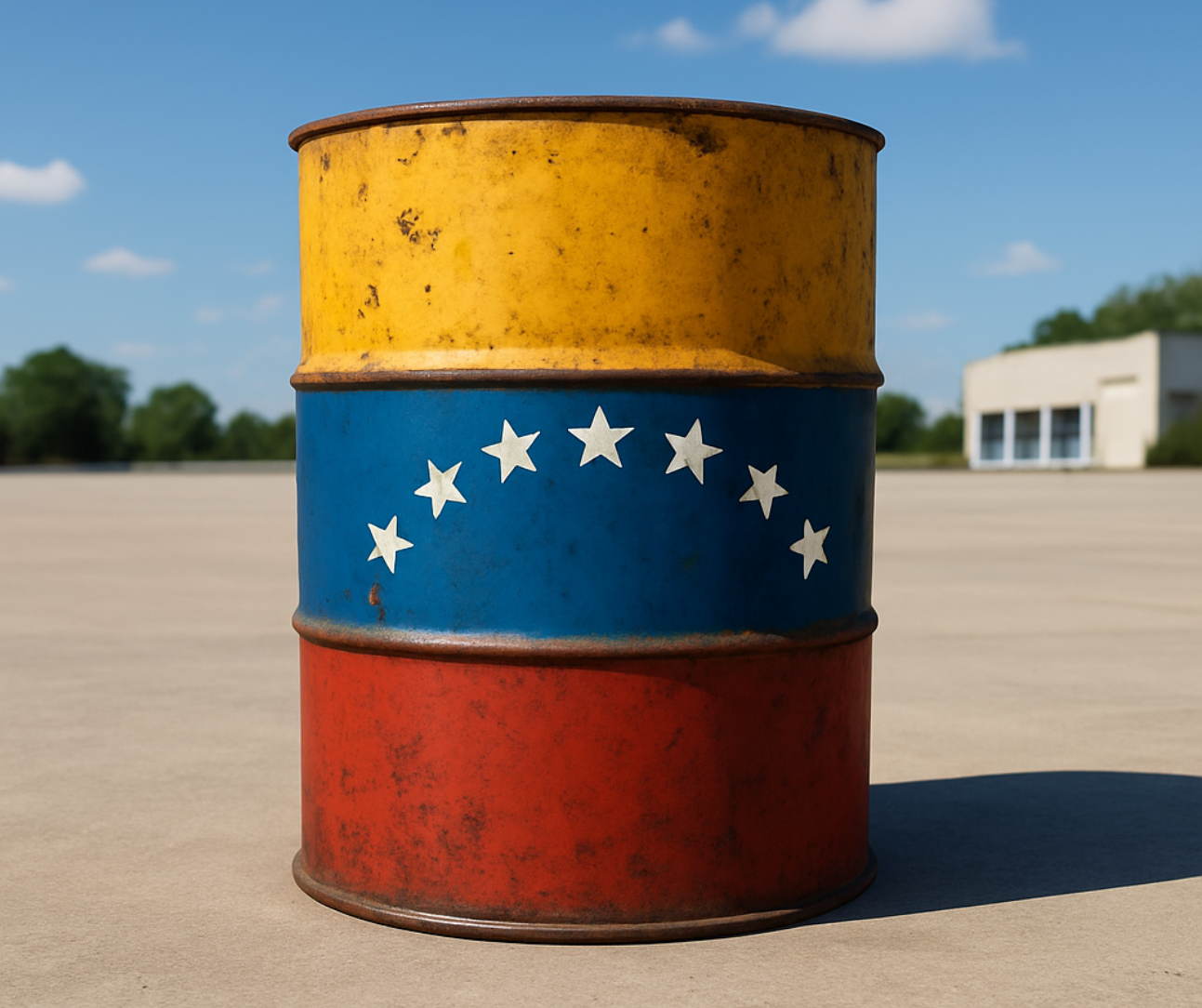
In a White House meeting with oil executives in early January, President Donald Trump outlined a vision for expanded U.S. involvement in Venezuela’s energy sector. He framed it as an opportunity for American companies should there be a shift in political conditions. That framing, however, confuses a critical distinction: corporate exposure to Venezuela is neither uniform nor interchangeable.
Chevron stands apart. Operating under existing licenses, ithas stabilized production, generated free cash flow, and accepted political friction as a function of duration rather than a trigger for exit. That position is not widely shared. ConocoPhillips has prioritized enforcing multibillion-dollar arbitration claims tied to prior expropriations, making any reinvestment contingent on legal guarantees that remain absent and Exxon, scarred by earlier asset seizures, is effectively out of scope altogether.
Chevron’s presence alone does not change Venezuela’s investment case. It highlights how narrow it is, with viability limited tobalance sheets able to absorb political risk duration without eroding shareholder value.
Operators and investors alike understand the constraints. Decades of underinvestment have degraded infrastructure, heavy crude systems, and workforce capacity, while unhedgeable rule-of-law risk and prior nationalisations continue to undermine investor confidence in long-term asset protection. With these elements in mind, key questions are being raised as to whether any U.S. administration can credibly guarantee asset protection beyond one election cycle. Even the most optimistic scenarios assume incremental barrels at best in the near term and meaningful production recovery is likelyto be a five-to-ten-year exercise assuming a political stability is established.
While many are focused on whether the Venezuelan market re-emerges, the more relevant question is what its prolonged dysfunction reveals about the global energy system.
Tightness Is Structural, Not Cyclical
Venezuela’s potential re-emergence reveals that the world's oil supply has less slack than previously assumed.
The U.S. refining system was built for heavy crude, and the country is structurally short of heavy barrels. Mexican production is instructural decline; Canadian barrels face transportation and political constraints, and sanctioned Russian and Iranian volumes are conditional and volatile.
This is why Venezuela keeps resurfacing in market conversations, even when many believe it is not imminently investable. It is logistically advantaged, with short shipping distances to the U.S. Gulf Coast. It’s also economically advantaged, with transportation costs at roughly $2 per barrel, cheaper than Canadian crude moved by rail.
In a constrained market, these barrels cannot be ignored.
Capital Is Disciplined. Systems Are Not.
But from an investor’s perspective, Venezuela highlights a recurring mismatch between capital discipline and physical reality. When capital avoids political duration, physical systems do not pause, they decay.
The public markets are understandably intolerant of capital uncertainty. Undefined capex, political interference, and unclear ownership structures destroy equity narratives. That makes Venezuela a high-risk investment proposition for most capital, irrespective of reserve size.
Unfortunately, that discipline does come with consequences. Capital concentrates in a narrower set of perceived safe basins and as a result, global spare capacity thins, and the system becomes increasingly reliant on aging infrastructure elsewhere. The result is not just tighter supply, but a redistribution of economic leverage away from upstream producers and toward parts of the value chain that control flexibility and access.
It must be made clear that this isn’t about criticizing prudent capital allocation; it’s about recognizing its downstream effects. Inpractice, geopolitical friction rarely rewards upstream risk-taking.
So who wins? Refiners with feedstock optionality gain pricing power, midstream and logistics assets benefit from rerouted flows and bottlenecks and service providers see opportunity once capital returns. This is why Venezuela matters far more to refining economics and heavy-light differentials than to upstream growth narratives. The barrels matter, but the margins move elsewhere first.
When Political Time and Market Time Diverge
A central feature of the modern energy markets is the divergence between political time and market time. Financial markets reprice risk and reallocate capital far faster than political systems resolve uncertainty, and that adjustment typically takes the form of deferral or withdrawal rather than reinvestment.
Markets price optionality and reallocate capital rapidly. Political systems move through sanctions, negotiations, and institutional repair at a far slower pace. When these timelines are treated as interchangeable, capital adjusts long before political risk has truly been resolved.
The result is not simply delayed investment, but physical decay. Infrastructure degrades, workforces erode, and operating systems lose resilience while capital waits on clarity that politics cannot deliver on market schedules. Even with capital, rebuilding degraded systems requires labor, services, and sequencing capacity that cannot be reinstated on demand.
Venezuela illustrates this divergence clearly. Political signals, including recent discussions in Washington, may shift expectations, but they do not compress the timelines required to restore infrastructure, labor, or trust. This dynamic is not unique to Venezuela. Russia, Iran, and parts of the Middle East reflect the same pattern: energy systems deteriorate quietly during prolonged political uncertainty and recover slowly, long aftermarkets have moved on.
How Executives and Investors Are Thinking About Risk
Taken together, these dynamics point to the different ways risk is being evaluated. Rather than debating Venezuela’s return, the focus has shifted toward a more practical set of considerations:
Where does prolonged geopolitical friction create durable advantages?
Which assets benefit from scarcity rather than volume growth?
Who can tolerate political duration without destroying equity value?
Where does capital return last, and earn the highest marginal return when it does?
These questions reflect how capital is being positioned around duration and risk, rather than short-term narratives.
Venezuela is not a misunderstood opportunity. It’s risks are well documented, and engagement is limited to those able to tolerate political duration. What matters more is that the same forces constraining Venezuela - slow political resolution, institutional fragility, and disciplined capital - are also shaping outcomes across the broader energy system.
As capital defers investment in response to prolonged uncertainty, the cost is absorbed elsewhere: spare capacity erodes, system flexibility tightens, and economic leverage migrates toward those able to withstand duration. The persistent challenge for the energy market is operating in a system where political time and market time rarely align, leaving physical systems to absorb the cost of prolonged uncertainty.

.png)